Uzbekistan / Uzbekistan today
Young, urbanising and growing fast.
Uzbekistan is the most populous country in Central Asia and, since 2017, one of the most active reformers in the emerging world. The direction of travel is clear; the execution is where intelligence earns its keep.
Around 37 million people live in Uzbekistan, with a median age under thirty and a steady movement towards the cities. Roughly half the population is urban, the labour force grows every year, and a large diaspora working abroad sends home remittances that support domestic consumption. Demography is the country's principal structural asset and its principal policy challenge.
Real GDP growth reached approximately 7.7% in 2025, placing Uzbekistan among the fastest-growing economies in the region. Growth is broad-based: construction, services, mining, textiles and a rapidly digitalising financial sector. Inflation has moderated from post-liberalisation peaks but remains the main constraint on monetary policy, and the som floats within a managed framework.
The reform agenda since 2017 has covered currency convertibility, price and tariff liberalisation, tax simplification, the unwinding of forced labour in the cotton harvest, and the gradual opening of closed sectors. WTO accession negotiations are ongoing and have become the organising framework for trade and regulatory reform. Sovereign eurobonds, including som-denominated and sustainability issues, have established a benchmark curve and, with it, a discipline of disclosure.
The 2025-2027 privatisation programme is the most consequential item for foreign capital: state banks, industrial assets, chemicals, utilities and hospitality are all in scope, alongside continued sales of minority stakes on the local exchange. Foreign direct investment has risen accordingly, with Chinese, Russian, Turkish, Gulf and increasingly European and North American investors all active.
An honest reading also records the constraints: the state remains the largest shareholder in the economy, administrative capacity is uneven between ministries, informality is significant, and the gap between a decree and its implementation can be months. None of this argues against investing. It argues for knowing, in each specific case, who decides and what has actually been done.
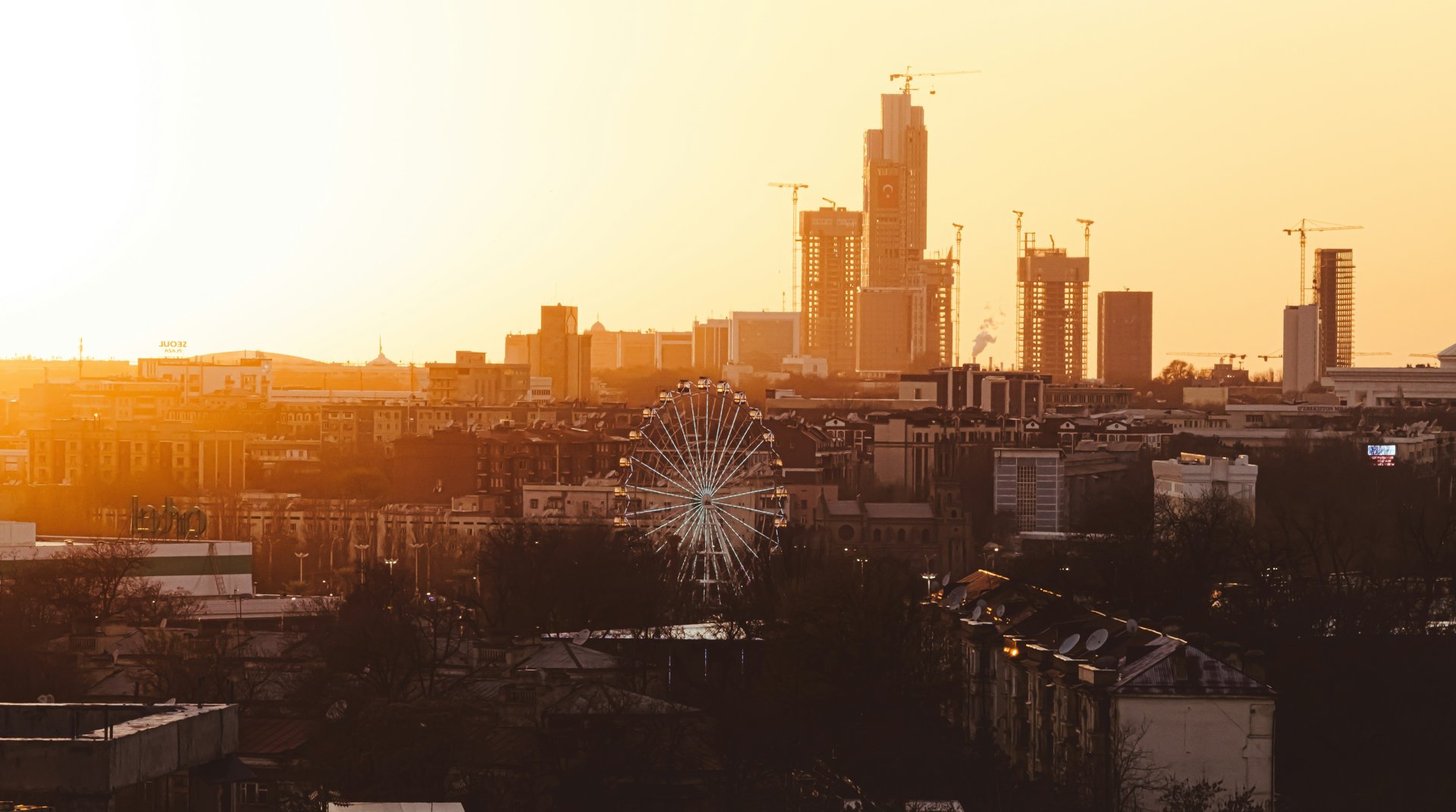
The Tashkent skyline at dusk
Sources
World Bank country data; IMF Article IV consultations; OECD reviews of Uzbekistan; Uzbekistan Statistics Agency; World Nuclear Association; United States Geological Survey (USGS).
Data as of 2026, sources: World Bank, IMF, OECD, Uzbekistan Statistics Agency, World Nuclear Association, USGS.
Request an initial diagnostic.
A confidential, structured first conversation on your objectives in Uzbekistan and how we would approach them.