Report
Uzbekistan's Privatization Drive
Ambition, the Tashkent-London listing strategy, and what is actually investable.
Nazar Advisory · Tashkent · October 2026
Executive summary
Uzbekistan's privatization program has moved from a domestic exercise in asset sales to a genuine capital markets story, and it is now the structural development most likely to shape how international investors engage with the country over the next two to three years. The state has cut the number of enterprises it holds a stake in by 60% over five years, to 1,685, and now puts its own economic footprint at 42% of the economy, against a stated ambition of bringing that down to around 15% 1 2.
The September 2026 decree, the latest and largest tranche to date, covers stakes in 84 companies, 1,242 real estate assets and roughly 8,000 hectares of land, with a combined value above $8 billion and a minimum budget revenue target of 14 trillion soums by year-end 3.
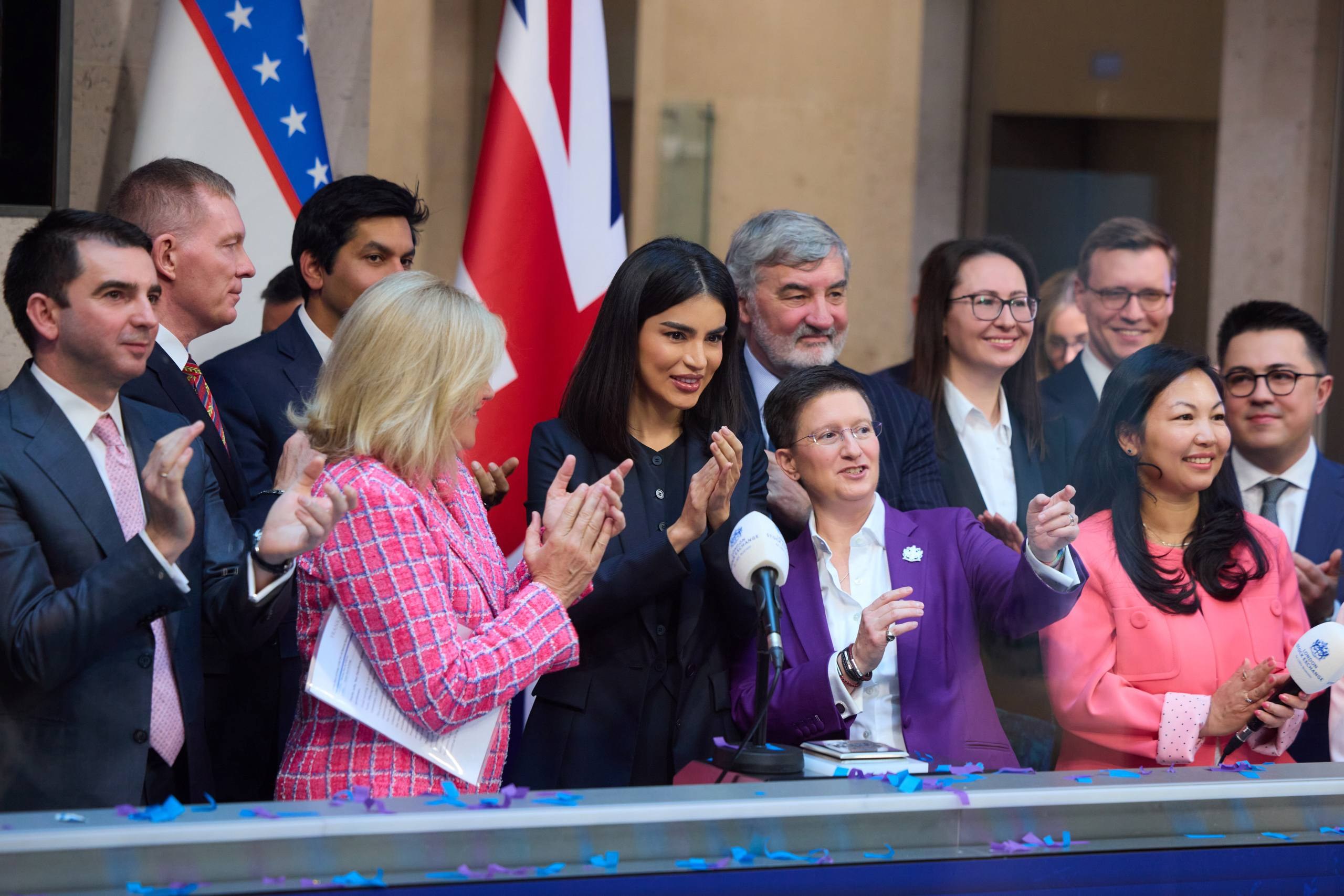
The listing side of the story reached a genuine milestone in May 2026, when the Uzbekistan National Investment Fund (UzNIF) raised $603.6 million in Uzbekistan's first global equity offering, dual-listed on the Tashkent and London stock exchanges and backed by a credible cornerstone book that included BlackRock-managed funds, Franklin Resources and Redwheel 4 5. Market participants describe UzNIF as a deliberate test case, a lower-sensitivity vehicle meant to build a track record and a pricing benchmark ahead of harder, single-asset listings such as Navoi Mining and Uzbekneftegaz 6.
Sector coverage looks broad on paper, covering banking, energy, telecoms, transport, mining, manufacturing and real estate. But the label 'privatization' hides very different realities. UzAuto Motors' People's IPO transferred just 0.3% of the company to private hands 7, essentially symbolic. UzNIF's fund offering was substantial, roughly 30% of its capital sold to real international investors. A Navoi Mining or Uzbekneftegaz listing would be different again, a single major asset rather than a diversified fund, and neither has a firm date.
Investor receptivity is improving on credible, independent measures: all three major rating agencies moved to positive outlooks or upgrades through 2025 and 2026, citing privatization progress among the drivers 8 9. The government's response to its most criticized transaction to date, the non-competitive 2022 sale of UzAgroExportBank, is telling in itself: a new privatization law, in force since May 2024, now mandates competitive methods, electronic auctions and competitive bidding, and public disclosure through the State Assets Management Agency 10, a clear signal that Tashkent understands a credible, rules-based framework is what ultimately convinces international investors to commit capital.
Our own reading: the program is credible and accelerating. UzNIF-style minority vehicles are, today, the lowest-friction way for an outside investor to gain diversified, liquid exposure to Uzbekistan's state-enterprise sector. The crown-jewel single-asset listings remain a 2027-2028 story to track, not one to act on yet, and the real estate, land and smaller-enterprise tranches that make up the bulk of every decree by count are where local engagement, not headline reading, will determine outcomes.
1. The Government's Ambition
Privatization is not a new idea in Uzbekistan. Under President Islam Karimov, programs in the late 1990s and 2000s were announced with similar ambition and delivered comparatively little; by the time President Shavkat Mirziyoyev's reform agenda began in earnest, the installed base of state ownership across the economy was still extensive 11.
The modern push dates to around 2021, when the government set its first genuinely specific sector target: cutting the state's share of banking system assets from 85% to 40% by 2025 through the full sale of six large state banks. Early results were modest in scale, by mid-2020 only, 299 state assets had been sold, for a combined $33 million, averaging roughly $100,000 each, though the broader reform agenda coincided with foreign direct investment rising from $1.6 billion in 2018 to $4.2 billion in 2019 11.
The pace has since accelerated materially. Official figures put the cut in the number of state-linked enterprises at 60% over the past five years, from a considerably larger base to 1,685 enterprises with state participation today, and the state now puts its own share of the economy at 42% 1. Separately, officials have cited a target of bringing that figure down to around 15% through the privatization of 67 large enterprises together with ongoing real estate and land auctions 2.
The government's own enterprise-level diagnosis is notably granular, and that granularity is itself a useful signal. Officials have identified 362 specific loss-making enterprises, with combined losses of around 4 trillion soums, and a further 85 slated for liquidation or reorganization, precise, named categories rather than vague commitments 1 12. The same discipline applies to land: roughly 3,100 of 11,400 hectares of allocated industrial land showed no economic activity between 2022 and 2025, a finding now driving a push to auction land as ready-to-build plots with permits attached 12. For an investor, this detailed self-audit is a reasonably reliable map of where deal flow will be pushed out first, distressed assets and underused land ahead of anything else.
The revenue dimension matters for understanding the pace of reform. Privatization in the most recent reporting year generated around 30 trillion soums in asset sales and more than 10 trillion soums in budget revenue 1. Separately, and tellingly, the state-owned enterprises that remain in state hands paid 49 trillion soums in dividends to the budget over the same period 1. That single figure, nearly five times the direct privatization revenue, is the clearest explanation for why the government is privatizing aggressively at the margin (loss-making enterprises, real estate, land, minority stakes) while moving far more cautiously on the handful of assets, Navoi Mining chief among them, that are still net cash generators for the state.
2. Listing in Tashkent and London
The domestic phase: People's IPOs
Uzbekistan's first generation of listings, the so-called People's IPO program, ran through 2021-2023 on the Tashkent Stock Exchange and targeted a broad domestic shareholder base rather than international capital. Participating companies included UzAuto Motors, Uzbektelecom, Almalyk Mining and Metallurgical Complex, the Republican Commodity and Raw Materials Exchange, and the railway container operator Uztemiryulcont, offered on a “one share, one lot” basis through digital platforms aimed at retail investors 13.
UzAuto Motors is the clearest illustration of both the program's symbolic intent and its commercial limits. Its IPO completed in February 2023 on the Tashkent Stock Exchange; the outcome left the state, via Uzavtosanoat's subsidiary PVM LLC, with 99.7% ownership, and just 0.3% in private hands 7. The listing built a public share register and a pricing mechanism, but it transferred essentially no control or economic interest to outside capital. In retrospect, this is best read as a necessary first step: building a domestic shareholder base, a public share register and retail market infrastructure, the foundation the program's more ambitious, internationally oriented stage, UzNIF and what follows, could later build on.
The London pivot: UzNIF as proof of concept
The more consequential shift came in May 2026, when the Uzbekistan National Investment Fund executed a simultaneous dual listing: Global Depositary Receipts on the London Stock Exchange main market, and ordinary shares on the Tashkent Stock Exchange. The deal raised $603.6 million before any over-allotment exercise, and was, by several measures at once, Uzbekistan's first global equity offering, the country's first London listing, 2026's largest London IPO at the time, and the first GDR listing anywhere under the UK's revised Listing Rules 4 14.
The offering was a clear success. Reported demand exceeded $2.8 billion against roughly $604 million raised, with more than 160 institutional investors participating and part of the placement made available to domestic retail investors through the Tashkent Stock Exchange 15. Roughly half of the placement was anchored by cornerstone commitments from BlackRock-managed funds, Franklin Resources, Redwheel and the Allan & Gill Gray Foundation 5. Since listing, the GDRs have traded more than 40% above the $25 offer price, a sign of investor appetite for the offering.
Franklin Templeton is central to the credibility of the structure. It has acted as trustee and manager of the fund since May 2025, with a mandate covering the IPO, the transformation of portfolio companies and corporate governance, and with representatives sitting on portfolio company boards 16. Officials and analysts alike framed the governance upgrade, more than the capital raised, as the main objective of the exercise 15.
The credit-rating backdrop
The timing coincided with, and was partly supported by, improving sovereign credit metrics. Fitch upgraded Uzbekistan to BB from BB- in mid-2025, its first upgrade in roughly seven years, while Moody's affirmed its Ba3 rating and moved the outlook to positive, and S&P took a similar positive stance, all citing reform and privatization progress among the drivers 8 9. The practical effect compounds for issuers: IMF-based estimates cited around a Fitch upgrade put the typical borrowing-cost benefit of a one-notch upgrade at roughly 0.70 percentage points, or about $7 million of savings per $1 billion raised, a benefit that flows through to subsequent sovereign and state-enterprise issuance alike 9.
What comes next
The pipeline of prospective global listings is real but not yet firm. Navoi Mining and Metallurgical Combine (NMMC), the world's fourth-largest gold producer, was originally targeted for a London listing by the end of 2025 under an April presidential decree; that timeline has slipped, reportedly to allow market depth and valuation transparency to improve, and estimates of its worth vary widely, from a market capitalization above £4 billion cited in the government's own 2025 program to an enterprise valuation (including debt) of roughly $20 billion cited by bankers close to the process 6 17. The delay appears driven less by market readiness than by fiscal arithmetic. We understand that officials are concerned that a listing could dilute the dividends NMMC pays to the budget 6. With gold above $5,500 an ounce in early 2026 and NMMC's 2025 pre-tax profit up 71% to $6.1 billion, the opportunity cost of selling a stake is high, while the Central Bank's reserves have reached a record of about $75 billion, 85% of it in gold. Sequencing UzNIF first, as a lower-stakes test case, is consistent with a government that wants to build its capital markets track record without giving up its best cash-generating asset at a cyclical peak. Citigroup, Morgan Stanley and JPMorgan are reported to be arranging the potential offering 6.
A digital platform, the fintech company Uzum, is pencilled in for a 2027 flotation at an indicative valuation of around $2.3 billion 18.
Implications for the client
The domestic People's IPOs are a weak proxy for genuine privatization and should not be read as evidence of investor access. UzNIF is the real proof of concept; the crown-jewel single-asset listings (Navoi, Uzbekneftegaz) remain pipeline, not product, and valuation ranges on them are still too wide to anchor a view.
3. Beyond Listings: Sales, Tenders and Strategic Stakes
Public offerings attract the headlines, but they are only one of the routes the state uses. The State Assets Management Agency acts as seller on behalf of the state and can dispose of assets through auctions and competitive tenders, alone or with a specialized private adviser.
The legal and operational framework
The 2024 Law on the privatization of state property, in force since 16 May 2024, sets out eight privatization methods, including electronic auctions and competitive bidding. It gives the Agency responsibility for asset assessment and price determination, allows assets to be sold in whole or in part with instalment payment, sets compliance requirements for purchasers, and provides for publication of programmes and procedures on the Agency's website 10. Auctions and competitions can be held online on the E-AUKSION platform, which the authorities intend to use at scale: an online auction covering 247 state enterprises has been announced 19.
How a sale proceeds
Most transactions follow two stages. In the first, the enterprise is prepared for sale: conversion into a joint-stock or limited liability company, IFRS accounts, a credit rating and a privatization strategy. In the second, the Agency sells by auction, competition or public offering and concludes the sale and purchase agreement with the winning bidder 19. Recent legislative changes also allow assets to be acquired at zero redemption value against significant investment commitments, so that the buyer's contribution takes the form of capital expenditure rather than purchase price 19.
The September 2026 decree adds payment flexibility for buyers: 15% down within 30 days, interest-free instalments of up to seven years, a 25% discount for full payment within six months on larger assets, and stepped price reductions of up to 10% on lots that go unsold 3.
Banking shows how the sequencing is managed. The updated Uzbekistan-2030 Strategy, approved on 16 February 2026, defers bank privatization in 2026 and projects the number of state banks falling from nine to seven in 2027, six in 2028, five in 2029 and four in 2030 20. The Agency has said that bank sales require thorough pre-sale preparation and consultant assessment, given the sensitivity of the assets 21.
Reference transactions
Two transactions show the strategic route. OTP Bank acquired 73.71% of Ipoteka Bank for $324 million, a negotiated sale of control to an international strategic buyer 22. The second is still in progress: the EBRD and the Uzbek authorities have agreed a term sheet for the EBRD to acquire 15% of Asakabank, with completion subject to transactional, regulatory and corporate requirements 23. The Agency has indicated that the wider Asakabank privatization is unlikely to be completed by the end of 2026 21. Taken together, they point to two entry points in banking: control through a strategic sale, and a minority position alongside a development institution.
Privatization routes beyond and alongside listings
| Route | Mechanism | Seller side | What it means for an investor |
|---|---|---|---|
| Auction or tender | Competitive sale on E-AUKSION or by tender, with public disclosure | State Assets Management Agency, alone or with a private adviser | Open entry for assets prepared for sale; price discovery is public, so competitive positioning matters |
| Strategic or direct sale | Sale of a controlling or significant block to a single buyer | Agency, with the institution concerned | Main route for large assets such as banks (Ipoteka Bank); early engagement determines who is at the table |
| Minority stake to an institution | Sale of a non-controlling stake to a development finance institution | Agency or the company | Lower-risk entry point and a governance signal for follow-on investors (Asakabank, in progress) |
| IPO or SPO | Offering on the Tashkent exchange; international listing possible after a national one | Agency, through the exchange and underwriters | Liquid exposure but limited float so far (see Section 2) |
4. Sectors and Objectives
The privatization program spans essentially every sector of the Uzbek economy, though the stated objectives, and the mechanism used, differ by sector.
| Sector | Representative assets / vehicles | Mechanism to date |
|---|---|---|
| Banking | Ipoteka Bank (73% sold to Hungary's OTP Group, 2023); Turonbank (98.9% stake in the September 2026 decree) | Strategic sale to a foreign buyer; decree-listed stake sale |
| Energy | UzbekHydroEnergo (via UzNIF, ~12% of national electricity); Uzbekneftegaz | Fund-wrapped minority stake; planned domestic then international IPO |
| Telecommunications | Uztelecom (People's IPO and UzNIF holding, ~12m subscribers); Mobiuz | Domestic IPO plus fund-wrapped minority stake |
| Transport & aviation | Uzbekistan Airways (25% via UzNIF, 6.6m annual passengers); Humo Air (100% in the Sept. 2026 decree); Uztemiryulcont | Fund-wrapped minority stake; outright decree sale; People's IPO |
| Mining & metals | Navoi Mining and Metallurgical Combine (NMMC); Almalyk MMC | Prospective global IPO (NMMC, delayed); domestic People's IPO (Almalyk) |
| Manufacturing | UzAuto Motors; Tashkent Tractor Plant | Domestic People's IPO; decree-listed sale |
| Insurance | Xalq Sug'urta (100% in the Sept. 2026 decree) | Decree-listed outright sale |
| Real estate & land | 1,242 properties and ~8,000 hectares in the Sept. 2026 decree alone | Public auction, eased payment terms |
Officials consistently cite four objectives behind the program: budget revenue, in a context where SOE dividends still outweigh privatization proceeds roughly five to one; reducing the state's economic footprint toward the 15% target; efficiency and productivity gains at enterprises that have accumulated losses and idle assets under state management; and development of the domestic capital market, including explicit requirements on new owners around job preservation and technology adoption 1 12.
5. Case Study: UzNIF
The Uzbekistan National Investment Fund is a closed-end investment vehicle that bundles minority stakes, reported at between roughly 25% and 40% depending on the underlying company, in 13 state-owned enterprises spanning energy and utilities, telecommunications, banking and transport 14 18. It was the vehicle chosen for Uzbekistan's first global equity offering, precisely because a diversified minority-stake fund carries less single-asset political sensitivity than, say, a standalone Navoi Mining listing.
| Reported segment | Approx. weight | Anchor company / detail |
|---|---|---|
| Transportation | ~32% | Uzbekistan Airways (25% stake held via UzNIF; 6.6m annual passengers; the fund's highest-valued holding) |
| Services / banking | ~28% | Not fully itemised in public reporting; recommend requesting the fund prospectus for the complete list |
| Energy | ~19% | UzbekHydroEnergo (operates roughly 12% of national electricity generation) |
| Telecommunications | ~15% | Uztelecom (approx. 12 million subscribers; 96% national coverage) |
The fund's net asset value stood at $2.44 billion as of 31 December 2025 18. The Ministry of Economy and Finance, as selling shareholder, offered approximately 30% of the fund's share capital, pricing ordinary shares at 4.65 soums on the Tashkent Stock Exchange (with a 5% discount, to 4.41 soums, for qualifying domestic retail applications up to 12 billion soums) and GDRs at $25 each in London, with each GDR representing 64,700 underlying shares 24. The resulting offer valued the fund at approximately $1.95 billion, below its reported NAV; independent analysis has put the combined minority-stake and placement discount at over 35%, a level several commentators flagged as attractively priced for the risk being taken on 18.
The subscription period ran from 29 April to 12 May 2026; conditional trading in London began on 13 May, with unconditional LSE trading and secondary Tashkent trading commencing on 18 May 24. Cornerstone investors, committing roughly $300 million of the $604 million total, included BlackRock-managed funds, Franklin Resources funds, Redwheel, and two treasury entities of the Allan & Gill Gray Foundation, a quality of book that lends real credibility to the deal beyond the headline “first-ever” framing 5.
For an international investor, UzNIF's practical significance is twofold. First, it is, today, the most liquid and diversified way to gain exposure to Uzbekistan's state-enterprise sector from outside the country, at a valuation that looks reasonable against stated NAV. Second, its success is the explicit precondition for the next and larger listings, Uzbekistan Airways' own privatization is described as “edging closer” specifically because of the UzNIF offering, and NMMC and Uzbekneftegaz are both being sequenced to follow once London investors have a track record to reference 6 25. The main residual risks are governance and disclosure at the underlying-company level, which a fund wrapper reduces but does not eliminate, and secondary-market liquidity depth.
6. The Pipeline Ahead
The September 2026 decree is the clearest current statement of near-term pipeline. It covers state stakes in 84 companies, 1,242 real estate assets and approximately 8,000 hectares of land for business and urban development, with a combined value of roughly 100 trillion soums (above $8 billion) and a minimum revenue target of 14 trillion soums by the end of 2026 3. Named assets include a 98.9% stake in Turonbank, 100% of the insurer Xalq Sug'urta, 100% of Humo Air, a 91.83% stake in Uzexpocenter, and 79.27% of the International Business Center; the government separately plans to liquidate or reorganize 85 further state enterprises and to privatize stakes in 18 markets and shopping complexes 3. Payment terms were eased alongside the decree: a minimum down payment of 15% of value within 30 days, interest-free installment periods of up to seven years, and a 25% discount for full payment within six months on larger assets.
| Horizon | Scope | Key items |
|---|---|---|
| Now (decree-listed) | 84 company stakes, 1,242 real estate assets, ~8,000 ha of land | Turonbank, Humo Air, Xalq Sug'urta, Uzexpocenter, International Business Center |
| 2026-2028 | Up to 12 SOEs targeted for IPO or secondary offering, 10-25% stakes | Further banking, energy and manufacturing names expected; no full list published |
| Pipeline, undated | Crown-jewel global listings | Navoi Mining (delayed from 2025 target); Uzbekneftegaz (conditions approved, no launch yet) |
| 2027 (indicative) | Digital / fintech | Uzum, indicative valuation ~$2.3bn |
A structural change worth tracking in its own right is the golden share mechanism introduced by decree on 28 August 2026, applying to large and strategic enterprises as well as major universities and specialized medical centers, with mandatory public disclosure before any privatization and, from 1 October 2026, centralized share registration at the Central Securities Depository for any enterprise where the state holds more than 50% 26. Whether this is applied narrowly, as officially stated, or expands in practice to a wider set of transactions, is one of the clearer near-term signals of how serious the government is about full control transfer rather than partial, supervised liberalization.
A regional comparator: Kazakhstan
Uzbekistan's sequencing (domestic retail IPOs first, then a diversified fund vehicle, then prospective single-asset global listings) closely mirrors the path Kazakhstan's Samruk-Kazyna sovereign holding company followed, albeit over a considerably longer timeframe. Kazakhstan's People's IPO program began with KazTransOil in 2012 and KEGOC in 2014, both heavily retail-weighted domestic listings, before culminating in Kazatomprom's 2018 dual listing on the London Stock Exchange and the Astana International Exchange 27. Air Astana followed with its own roughly $300 million IPO in 2024 28. Uzbekistan is attempting to compress a broadly similar multi-year sequence into a much shorter window.
For a conversation, contact Guillaume Moinet (guillaume.moinet@nazaradvisory.com) or Zulfiya Zakirova (zulfiya.zakirova@nazaradvisory.com), co-founders of Nazar Advisory.
References
- [1]Measures to reduce state presence in the economy reviewed, Government portal of the Republic of Uzbekistan (gov.uz), 2026. https://gov.uz/en/news/view/150571
- [2]Uzbekistan plans to privatize an additional 67 large state-owned companies, Spot.uz, 10 April 2026. https://www.spot.uz/en/2026/04/10/privatization/
- [3]Uzbekistan to put more than $8 billion in state assets up for privatization, Asia Plus, 10 September 2026. https://asiaplus.news/en/2026/09/10/uzbekistan-to-put-state-assets-worth-over-8-billion-up-for-privatization/
- [4]Uzbekistan National Investment Fund lists in London after $604m IPO, bne IntelliNews, May 2026. https://www.intellinews.com/uzbekistan-national-investment-fund-lists-in-london-after-604m-ipo-442698/
- [5]Uzbekistan's National Investment Fund valued at $1.95 bln in IPO, Interfax, May 2026. https://interfax.com/newsroom/top-stories/117367/
- [6]Uzbekistan said to plot state fund London IPO before gold miner, Mining.com, 2026. https://www.mining.com/web/uzbekistan-said-to-plot-state-fund-london-ipo-before-gold-miner/
- [7]UzAuto Motors, Wikipedia, accessed October 2026. https://en.wikipedia.org/wiki/UzAuto_Motors
- [8]Moody's revises Uzbekistan's credit outlook to positive, affirms Ba3 rating, Daryo, 14 June 2025. https://daryo.uz/en/2025/06/14/moodys-revises-uzbekistans-credit-outlook-to-positive-affirms-ba3-rating/
- [9]Saida Mirziyoyeva hails Fitch upgrade of Uzbekistan's credit rating as experts see major financial benefits, Daryo, 27 June 2025. https://daryo.uz/en/2025/06/27/saida-mirziyoyeva-hails-fitch-upgrade-of-uzbekistans-credit-rating-as-experts-see-major-financial-benefits/
- [10]Uzbekistan adopts new Law on privatization of state property, UNCTAD Investment Policy Monitor, 2024. https://investmentpolicy.unctad.org/investment-policy-monitor/measures/4914/uzbekistan-adopts-new-law-on-privatization-of-state-property
- [11]A Closer Look at Uzbekistan's Privatization Push, The Diplomat, February 2021. https://thediplomat.com/2021/02/a-closer-look-at-uzbekistans-privatization-push/
- [12]Mirziyoyev Orders Faster Privatization in Uzbekistan, UzDaily, 2026. https://www.uzdaily.uz/en/mirziyoyev-orders-faster-privatization-in-uzbekistan/
- [13]People's IPO program aims to create a broad base of shareholders in Uzbekistan, UzDaily, 2026. https://www.uzdaily.uz/en/peoples-ipo-program-aims-to-create-a-broad-base-of-shareholders-in-uzbekistan/
- [14]UzNIF's IPO and Dual Listing in London and Tashkent, Cleary Gottlieb, 2026. https://www.clearygottlieb.com/news-and-insights/news-listing/uznifs-ipo-and-dual-listing-in-london-and-tashkent
- [15]UzNIF debuts on London market in first international Uzbek IPO, Euronews, 18 May 2026. https://www.euronews.com/business/2026/05/18/uznif-debuts-on-london-market-in-first-international-uzbek-ipo
- [16]Franklin Templeton as trustee and manager of the National Investment Fund, Spot.uz, 29 May 2025. https://www.spot.uz/en/2025/05/29/ft-uznif/
- [17]Uzbekistan Unveils Ambitious 2025 Privatization Program to Boost Economy, INVEXI, 2025. https://invexi.org/press/uzbekistan-unveils-ambitious-2025-privatization-program-to-boost-economy/
- [18]Restarting Uzbekistan: which companies are going IPO and whether to buy them, OnInvest, 2026. https://en.oninvest.com/article/restarting-uzbekistan-which-companies-are-going-ipo-and-whether-to-buy-them
- [19]Privatization, Invest in Uzbekistan investor guide, Ministry of Investment, Industry and Trade, accessed October 2026. https://invest.miit.uz/en/privatization
- [20]Uzbekistan will not privatize state-owned banks in 2026, UzDaily, 2026. https://www.uzdaily.uz/en/uzbekistan-will-not-privatize-state-owned-banks-in-2026/
- [21]Asakabank could be among the first state banks to be privatized, Spot.uz, 17 September 2026. https://www.spot.uz/en/2026/09/17/asakabank/
- [22]Transaction closed: OTP Bank acquired Ipoteka-Bank, Ipoteka Bank / OTP Group, 2023. https://www.ipotekabank.uz/en/news/ipotekabank_otpgroup/
- [23]EBRD to acquire 15% stake in Asakabank as part of privatization, UzDaily, 2026. https://www.uzdaily.uz/en/ebrd-to-acquire-15-stake-in-asakabank-as-part-of-privatization/
- [24]Uzbekistan's National Investment Fund launches IPO in Tashkent and London, Gazeta.uz, 30 April 2026. https://www.gazeta.uz/en/2026/04/30/uznif-ipo-start/
- [25]Uzbekistan Airways privatisation nears with investment fund IPO, FlightGlobal, April 2026. https://www.flightglobal.com/archive/2026/04/uzbekistan-airways-privatisation-nears-with-investment-fund-ipo/
- [26]Uzbekistan may retain a “golden share” in the privatization of strategic enterprises, Spot.uz, 10 September 2026. https://www.spot.uz/en/2026/09/10/golden-share
- [27]IPO history, Samruk-Kazyna, accessed October 2026. https://ipo.sk.kz/en/ipo-history/
- [28]Samruk Kazyna to Raise $300 Million in Air Astana IPO, The Astana Times, February 2024. https://astanatimes.com/2024/02/samruk-kazyna-to-raise-300-million-in-air-astana-ipo/
This briefing draws on official releases, company statements and independent press coverage current as of October 2026. Estimates, single-sourced claims and unresolved discrepancies between sources are flagged in the text.